
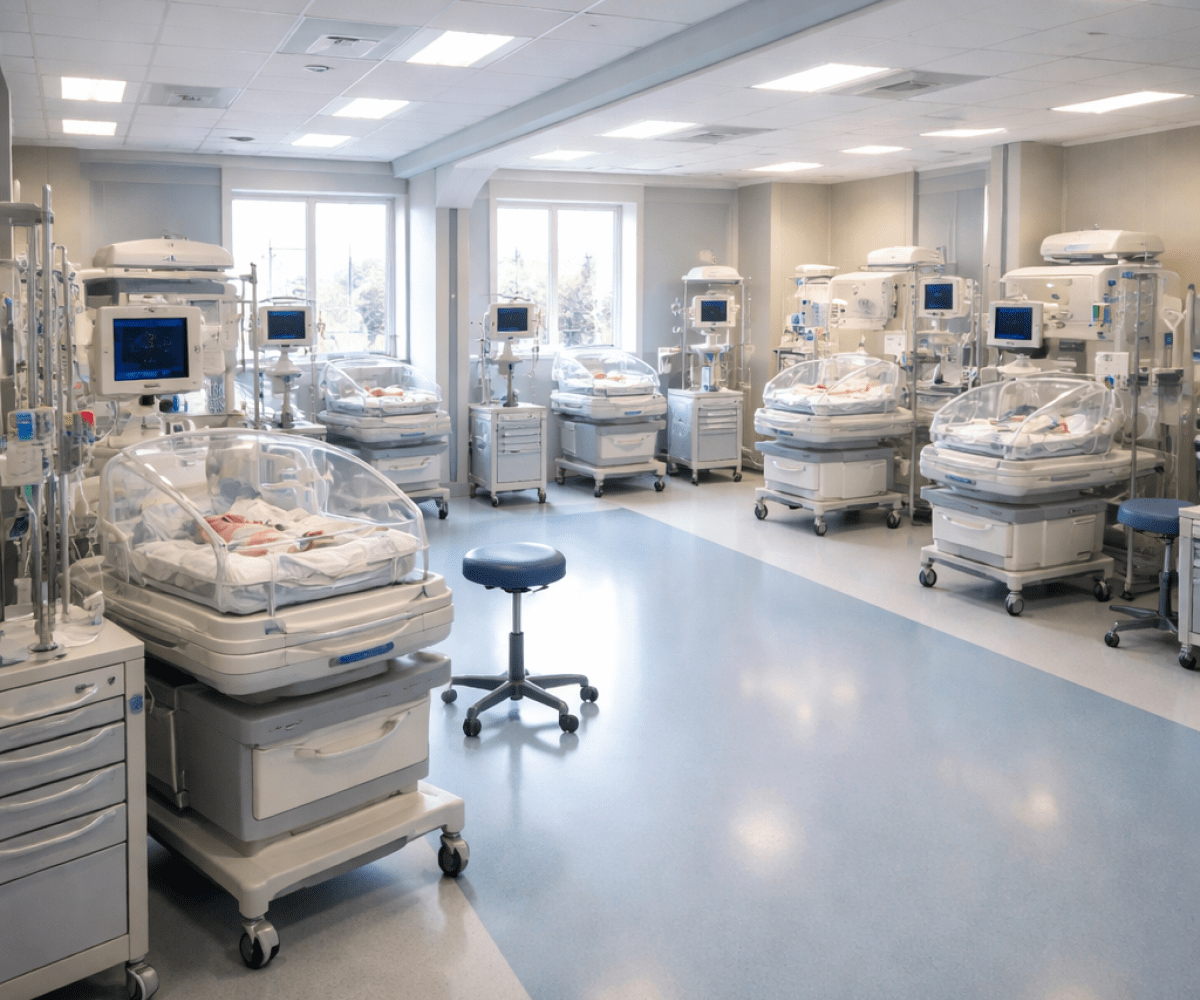
The NICU department of Kshitij hospital
The NICU of a Kshitij hospital provides specialized care to newborns who are premature, critically ill, or require close monitoring. Here’s an overview:
Services and Facilities
1. Advanced Neonatal Care: Management of premature infants, respiratory distress, and neonatal complications.
2. Incubators and Warmers: Controlled environment for temperature regulation.
3. Ventilation Support: Mechanical ventilation, CPAP, and oxygen therapy.
4. Monitoring: Continuous monitoring of vital signs, oxygen saturation, and apnea.
5. Nutrition Support: Parenteral nutrition, breastfeeding support, and feeding tubes.
Expert Team
1. Neonatologists: Specialists in newborn care.
2. NICU Nurses: Trained in neonatal care and monitoring.
3. Respiratory Therapists: Manage respiratory support.
4. Lactation Consultants: Support for breastfeeding and nutrition.
5. Multidisciplinary Team: Collaboration with pediatricians, surgeons, and other specialists.
Levels of NICU Care
1. Level I: Basic newborn care for healthy babies.
2. Level II: Care for moderate-risk infants (e.g., >32 weeks gestation).
3. Level III: High-risk infants (e.g., <32 weeks, complex medical needs).
4. Level IV: Highest level of care for critically ill newborns, with surgical capabilities.
Common Conditions Treated
1. Prematurity: Care for preterm infants (<37 weeks).
2. Respiratory Distress Syndrome (RDS): Management with surfactant and ventilation.
3. Neonatal Jaundice: Phototherapy and monitoring.
4. Congenital Anomalies: Surgical and medical management.
5. Infections (Sepsis): Antibiotic therapy and supportive care.
Technology and Equipment
1. Incubators/Warmers: Temperature control and humidity regulation.
2. Ventilators/CPAP: Respiratory support.
3. Infant Monitors: Continuous vital sign monitoring.
4. Phototherapy Units: Treatment for jaundice.
5. Neonatal ECMO: For severe cardiorespiratory failure (in advanced NICUs).
Family-Centered Care
1. Parental Involvement: Encouraging parents to participate in care.
2. Kamil (Kangaroo Mother Care): Skin-to-skin contact for stable infants.
3. Counseling and Support: Emotional support for families.
4. Follow-Up Care: Post-discharge monitoring and developmental support.
Protocols and Guidelines
1. Evidence-Based Protocols: Treatment based on latest neonatal guidelines.
2. Infection Control: Strict protocols to prevent hospital-acquired infections.
3. Neurodevelopmental Support: Early intervention for at-risk infants.